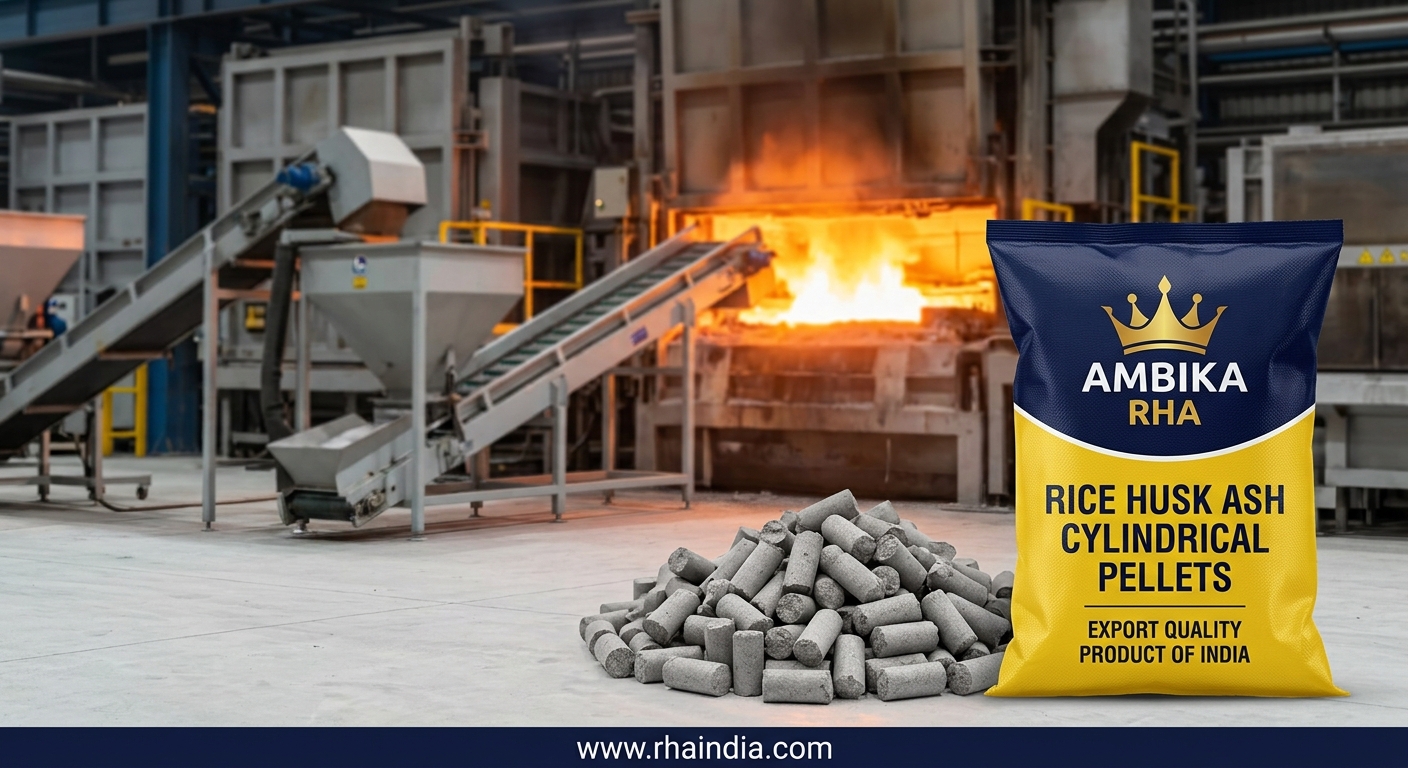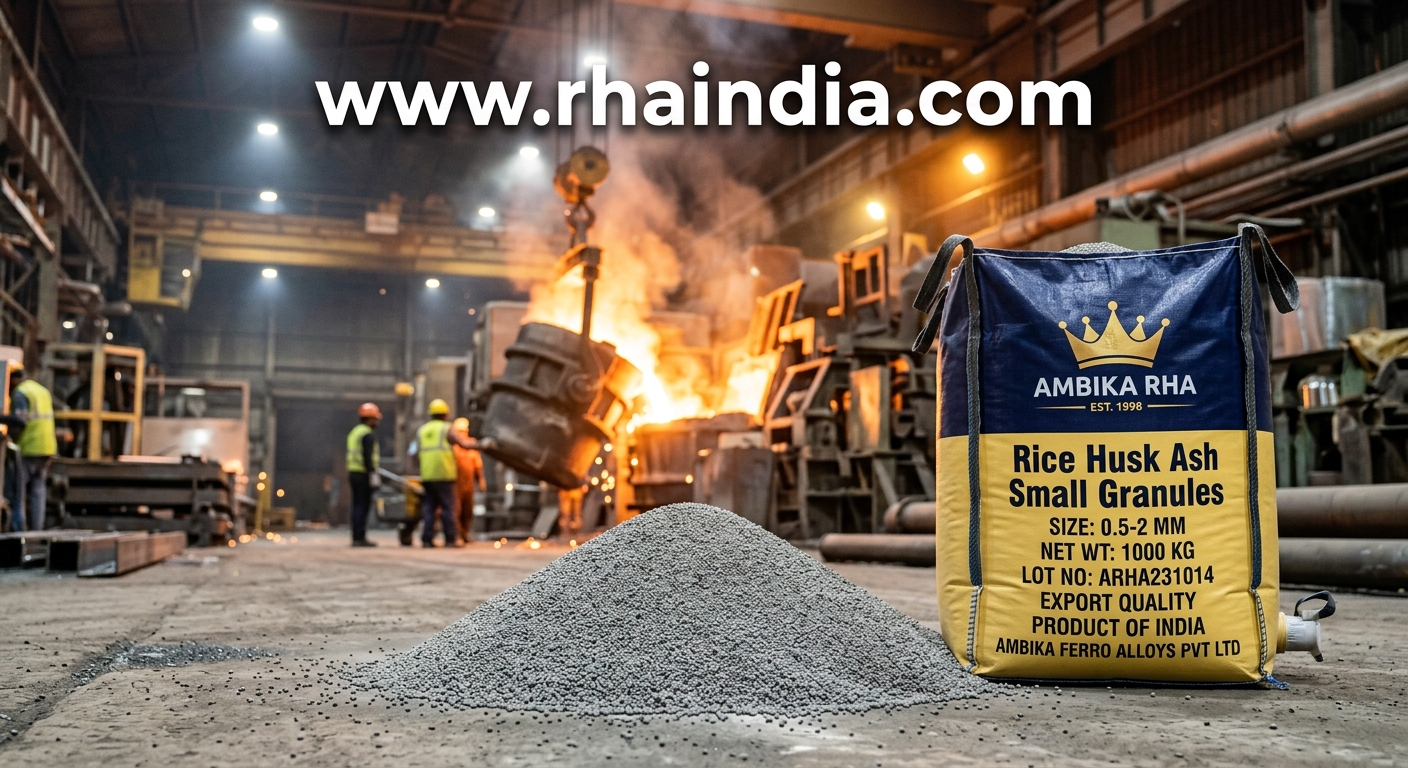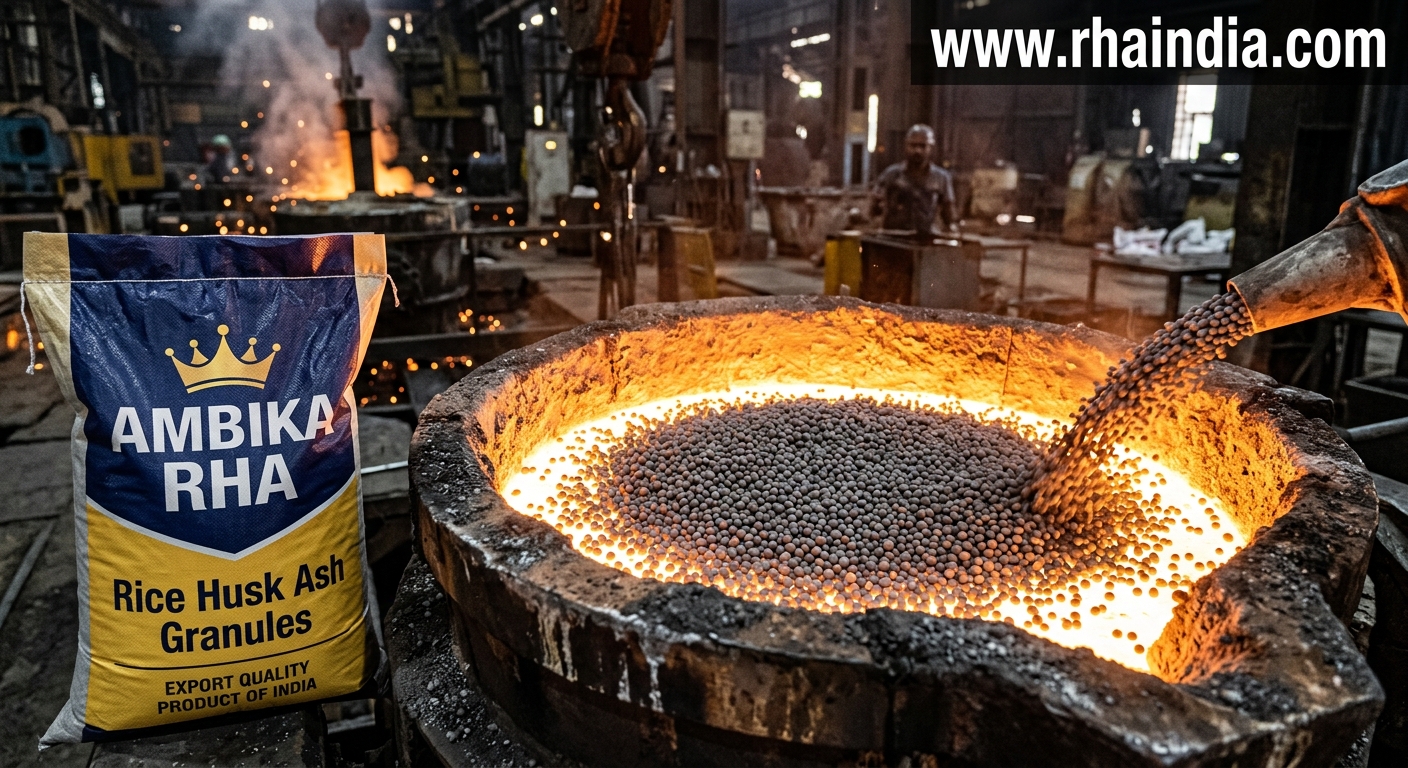
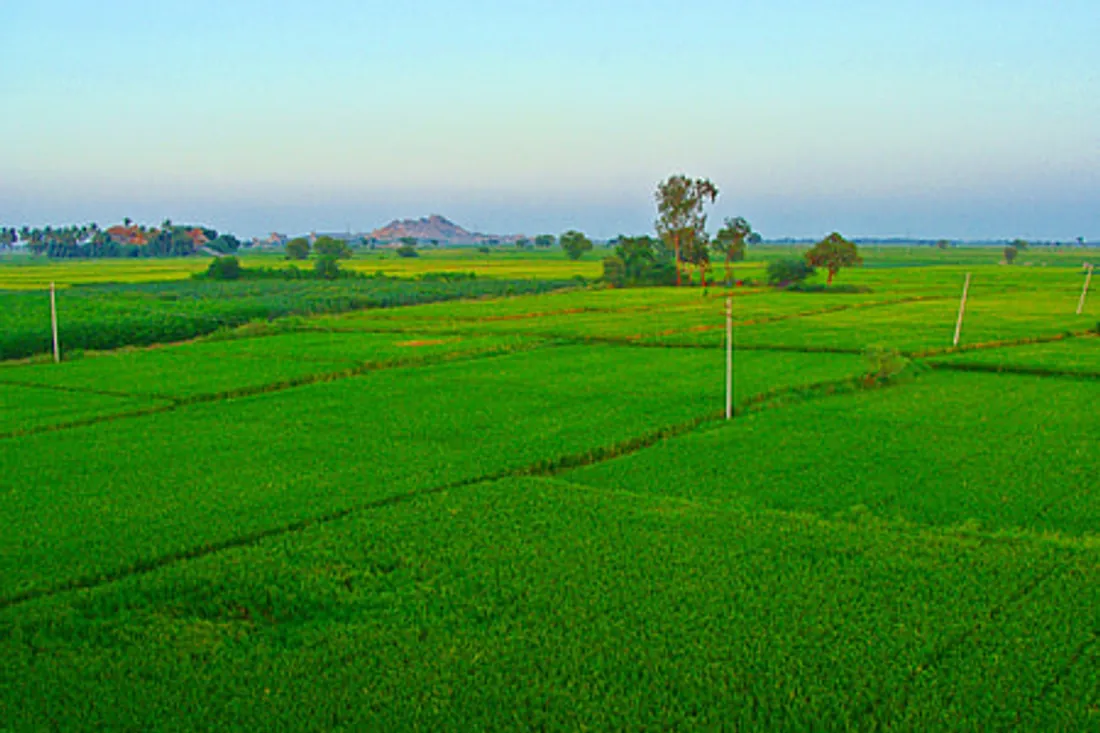
Every tonne of milled rice produces roughly 200 kg of husk. Traditionally this husk was burned in the open or dumped — wasting energy and releasing carbon for no benefit. Today, the same by-product is the start of a productive industrial loop.
A by-product with two valuable lives
Rice husk can be used directly as a renewable biomass fuel — and the ash that remains after combustion is itself a high-value industrial silica. One agricultural residue therefore replaces fossil fuel and a portion of energy-intensive cement clinker.
Keeping carbon in the loop
Because the carbon in rice husk was recently captured from the atmosphere by the crop, using it as fuel is effectively carbon-neutral. Turning the residual ash into a cement replacement avoids the CO₂ that would otherwise be emitted producing clinker — a double saving.
Value for farmers and industry
Channelling husk into pellets, powder and ash creates demand for what was once waste, supports rural incomes, and ends open-field burning. Industry, in turn, gets a lower-carbon raw material with a transparent, traceable origin.
Designed to be circular
This is the principle behind our operation: source the by-product, convert it into silica and clean fuel, and keep both carbon and material in a productive loop rather than sending them up in smoke.
Need RHA to a verified spec?
Get NABL-tested, high-silica RHA with documentation. Tell us your volume and target spec.