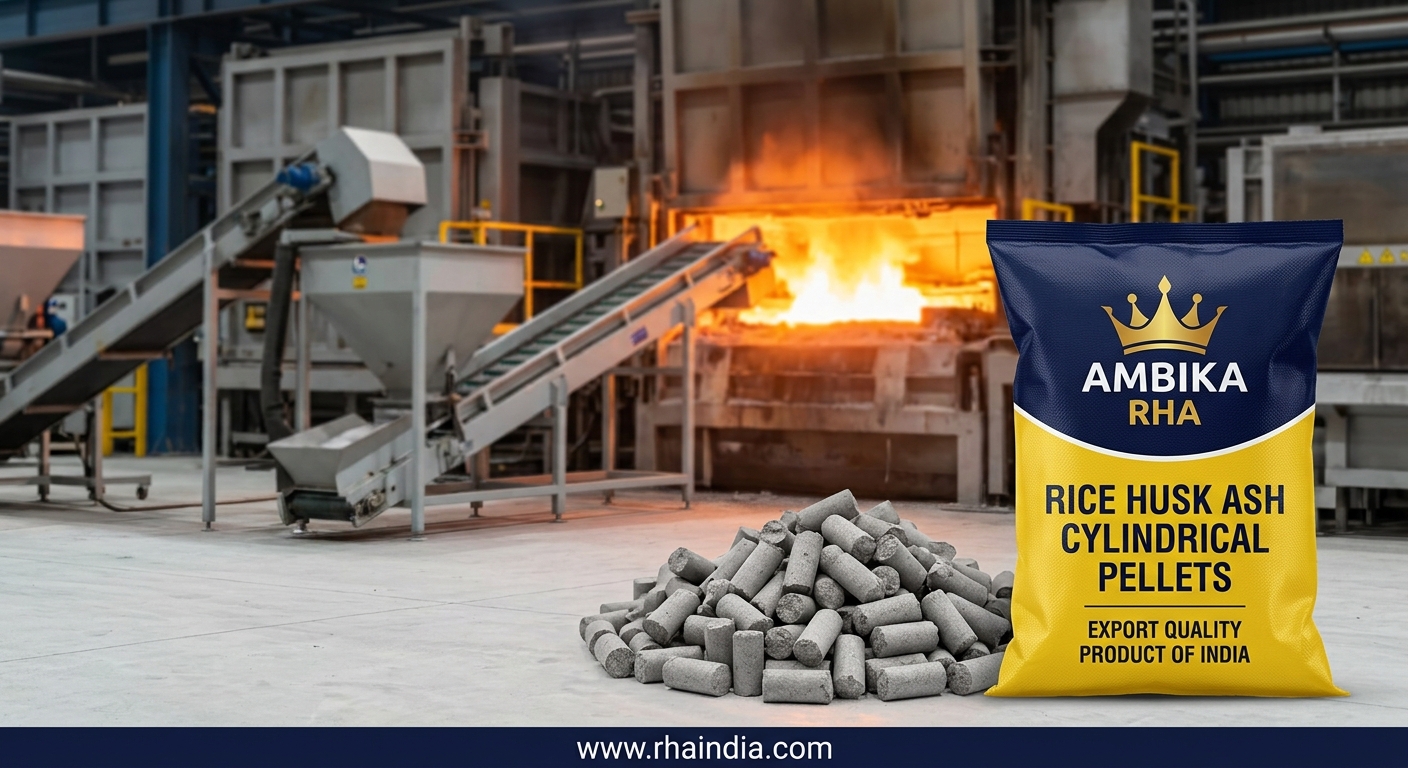
As industries face rising fuel costs and tightening emissions rules, many are evaluating rice husk pellets as a renewable alternative to coal. Here is a practical comparison across the factors that matter most to a plant manager.
Calorific value
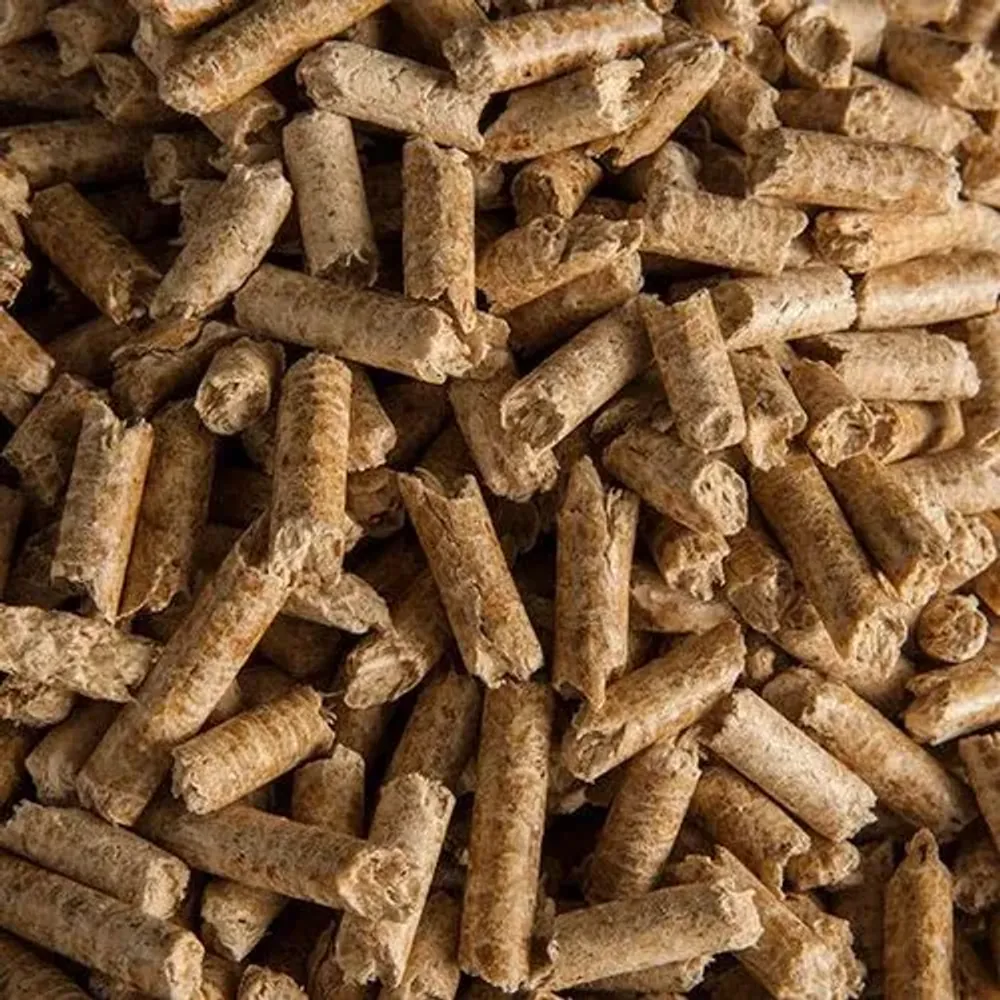
Rice husk pellets typically deliver a Gross Calorific Value of around 3,200–3,800 kcal/kg, lower than good thermal coal but with much more consistent quality and far lower sulphur. The densified pellet form burns more uniformly than loose husk and gives stable, predictable heat output.
Cost & availability
Biomass pellets are produced from an abundant agricultural by-product, which insulates buyers from volatile imported-coal pricing. While the energy density is lower per kilogram, the delivered cost per useful unit of heat is frequently competitive — especially where coal attracts duties, freight or carbon levies.
Carbon & emissions
Rice husk is a renewable, effectively carbon-neutral fuel: the CO₂ released on combustion was recently absorbed by the crop. Pellets also burn with very low sulphur and contribute to lower particulate and SOₓ emissions compared with coal — an advantage for compliance and ESG reporting.
Handling & feeding
Densified pellets have a high, uniform bulk density (around 600–700 kg/m³), are easy to store, and feed reliably through automated systems. Many plants co-fire pellets with coal first, then increase the biomass share as they gain operating confidence.
The verdict
For boilers, power plants and process-heat users, rice husk pellets offer a renewable, lower-emission fuel with stable supply. The right move for most plants is a co-firing trial to quantify the economics against their specific coal benchmark.
Need RHA to a verified spec?
Get NABL-tested, high-silica RHA with documentation. Tell us your volume and target spec.