In continuous casting and ladle metallurgy, what sits on top of the molten steel is almost as important as the steel itself. Rice Husk Ash granules are a widely used covering compound — here is what they do and why.
The job of a covering compound
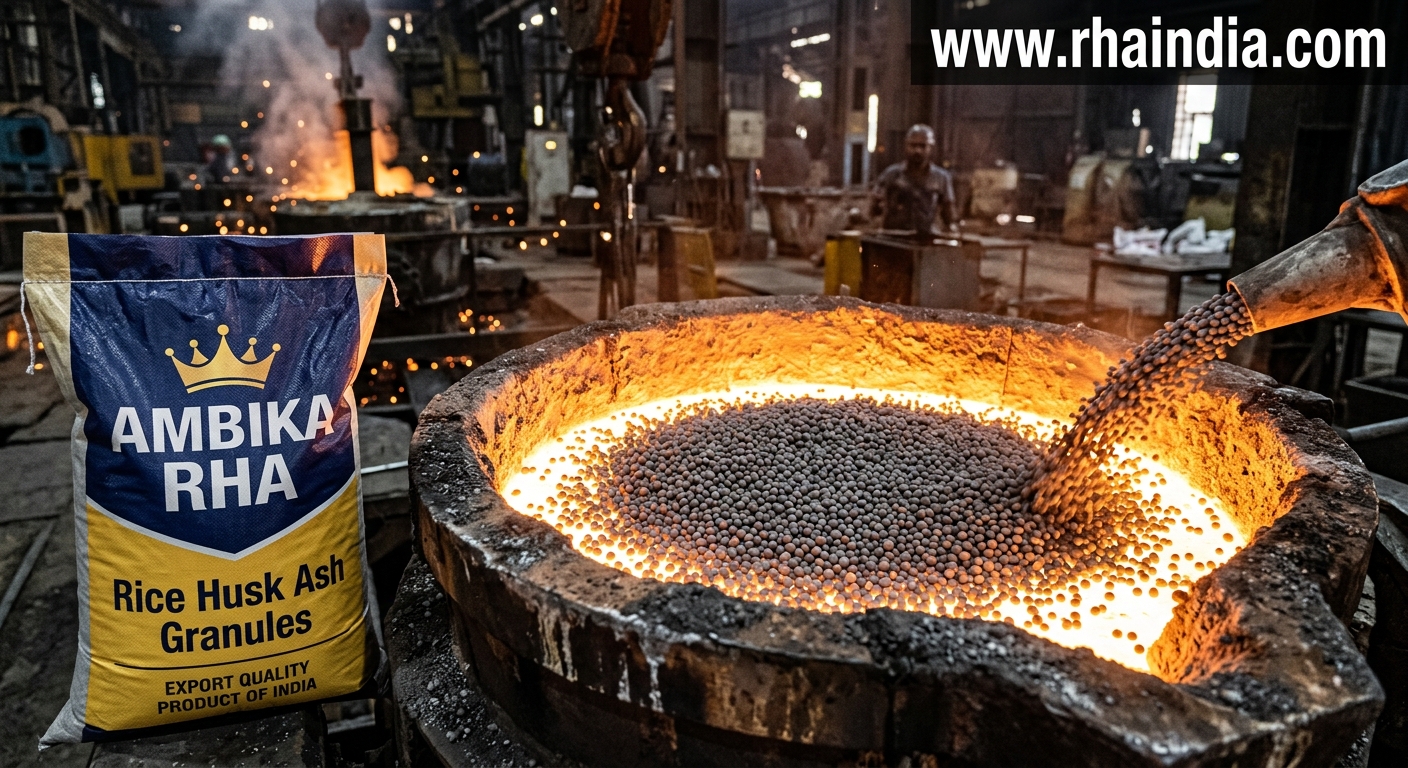
When molten steel is exposed to air it loses heat rapidly and reacts with oxygen, forming oxides that degrade quality. A covering compound spread over the surface in the tundish or ladle forms an insulating, non-wetting blanket that:
- Retains heat, keeping the metal at casting temperature for longer.
- Blocks reoxidation by isolating the melt from air.
- Absorbs inclusions that float to the surface, helping cleanliness.
Why rice husk ash works
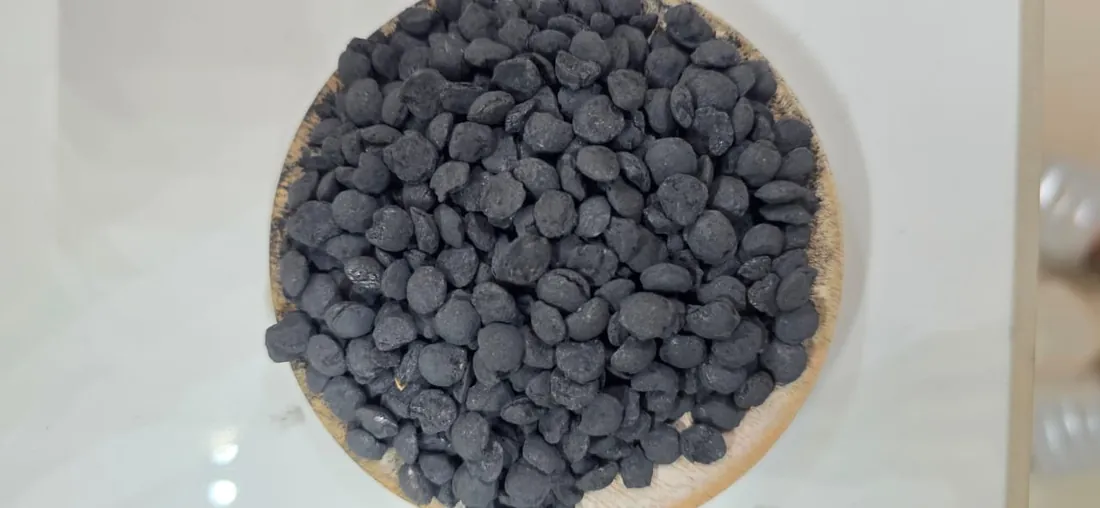
RHA is naturally high in amorphous silica and has low thermal conductivity — exactly the properties needed for an insulating cover. Its granulated form flows and spreads evenly, giving consistent coverage without clumping, and its carbon content can be tuned for the application.
Granules vs powder vs pellets
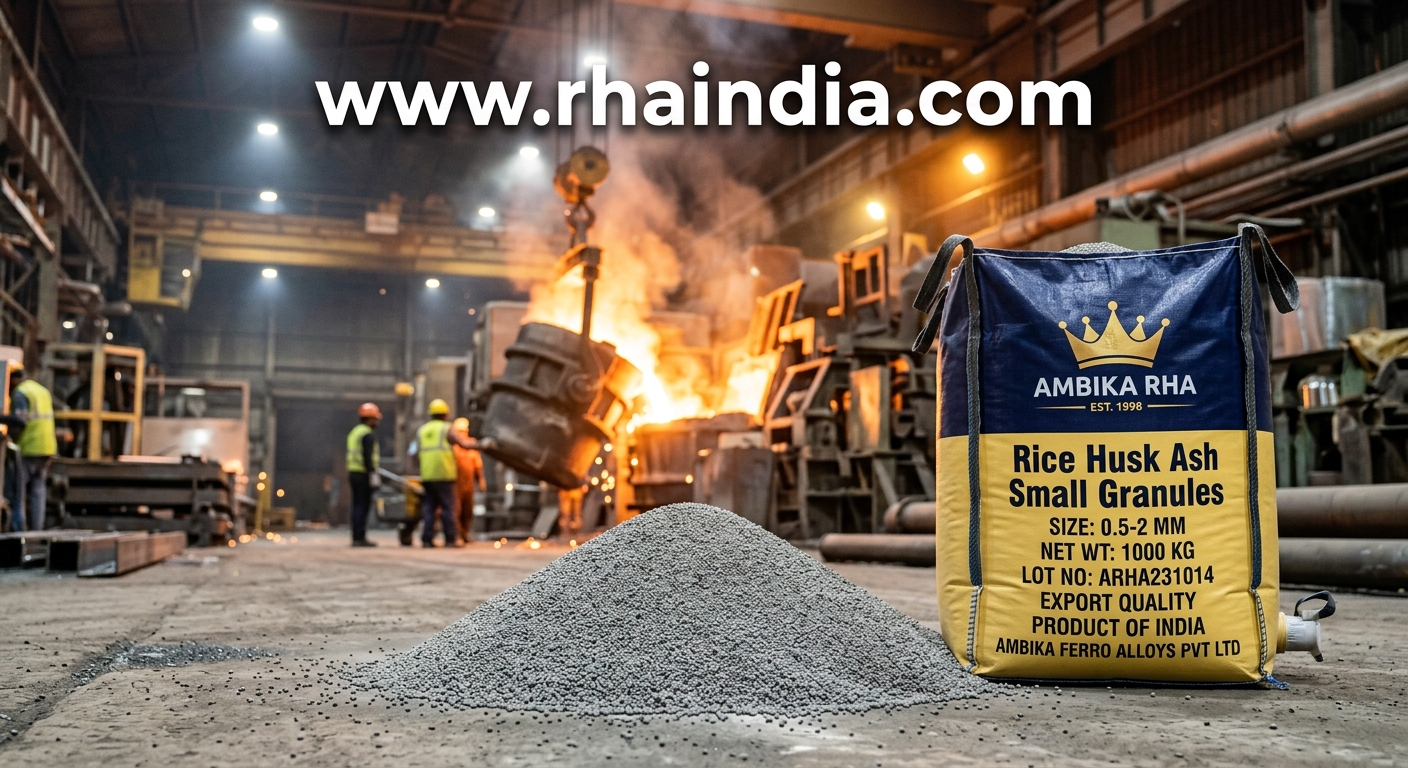
- Granules spread evenly and are the traditional covering choice.
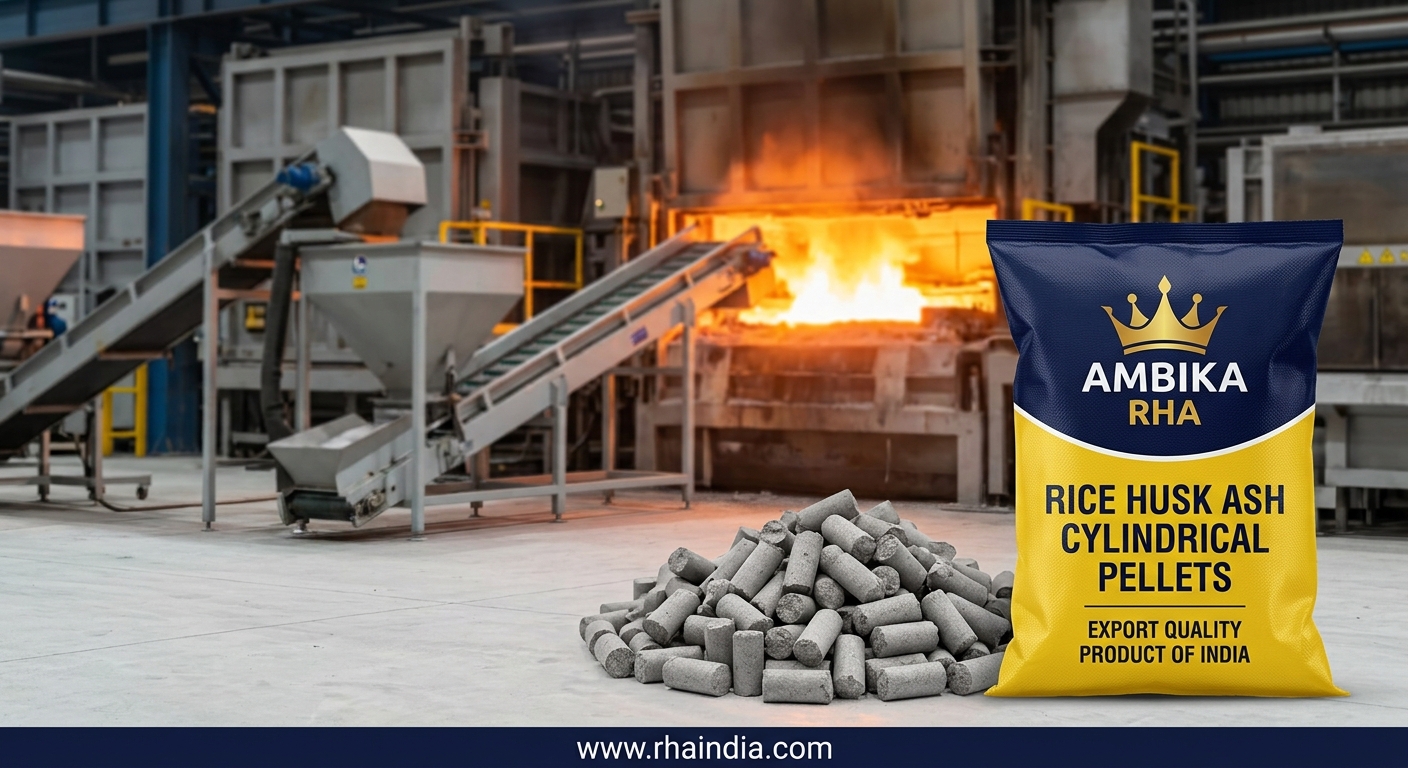
- Pellets are dust-free and free-flowing, ideal for mechanized, automated feeding in modern melt shops.
- Powder is finer and used where a tight, fine cover is preferred.
What to specify
Confirm SiO₂ content, granule size, bulk density, carbon content and moisture against a NABL-tested data sheet — and prioritise batch-to-batch consistency, because uneven covering performance shows up directly in yield and quality.
Spreading the right covering compound is a small line item that protects metal temperature, cleanliness and yield across every heat.
Need RHA to a verified spec?
Get NABL-tested, high-silica RHA with documentation. Tell us your volume and target spec.